I still remember the day I set my kitchen on fire. Not in the cool, metaphorical "this recipe is fire" way — I mean actual flames licking toward my smoke detector, all because I tried to shortcut a loaf of Italian herbs and cheese bread by cranking the oven to "turbo mode." The crust carbonized into something that could've patched asphalt, while the inside remained a doughy, gummy tragedy. I stood there holding a limp, blackened brick of disappointment, wondering why every version I tried tasted like cardboard sprinkled with regret.
Fast-forward through a dozen floury experiments, a few near-meltdowns, and one memorable evening when my neighbor banged on the wall because the aroma was driving him crazy (true story). I finally cracked the code. What emerged from my oven that victorious afternoon was a loaf so fragrant it could double as aromatherapy: a crackly, bronzed crust freckled with melted cheese, a crumb as tender as a sigh, and herbs that sang in perfect three-part harmony. One bite and I did the involuntary happy dance — you know, that shoulders-up, eyes-closed shimmy that happens when carbs meet destiny.
This is not the dry, saw-dusty stuff you grab in plastic sleeves at the grocery store. This bread is the life-of-the-party cousin who shows up with great stories and better perfume. Picture yourself pulling it from the oven, steam curling like it's auditioning for a commercial, the cheese bubbling like a tiny jacuzzi. Your kitchen smells like a trattoria hugged a herb garden. Butter melts on contact. Neighbors drift over "just to say hi." And the flavor? It's as if focaccia went on a romantic vacation with garlic knots and came back wearing a cheese lei.
Let me walk you through every single step — by the end, you'll wonder how you ever made it any other way.
What Makes This Version Stand Out
Melt Factor: We blanket the dough with a three-cheese trifecta that creates those Instagram-worthy cheese pulls. The aged Parm crackles, the mozzarella gives stretch, and a whisper of provolone adds nutty depth. Skip any one and the magic deflates like a sad balloon.
Herb Bomb Strategy: Instead of dusty dried flecks, we bloom fresh herbs in olive oil first, coaxing out oils that perfume the entire loaf. The difference is like comparing a scratch-n-sniff sticker to an actual rose garden — once you try it, there's no going back.
Crispy-Chewy Architecture: Steam in the oven plus a cast-iron blister produces that artisan crackle you thought only bakery pros could achieve. Inside stays custard-tender thanks to a hydration ratio that would make a hydrologist blush.
Foolproof Rise: We use a cold ferment that works while you sleep, developing flavor and gluten so you can't over-proof even if you binge Netflix until 3 a.m. Set it, forget it, then bake whenever the craving hits.
Make-Ahead Champion: Par-bake and freeze individual slices. Future-you can pop one under the broiler for four minutes and feel like a genius who planned ahead, even if you can't remember where you left your keys.
Zero Waste Crust: The bottom gets brushed with garlic-infused butter the moment it exits the oven, ensuring every millimeter gets eaten. I've seen people nibble the heel like it's a gourmet breadstick — no crust left behind.
Inside the Ingredient List
The Flavor Base
Bread flour is our backbone, delivering chewy gluten strands that trap cheese like edible cargo nets. Skip the all-purpose stuff; you want the protein punch that turns steam into stretch. If you only have AP flour, add two vital wheat gluten tablespoons per cup, or accept a denser, biscuit-like crumb that still tastes great but won't win any stretch contests.
Instant yeast saves you from the "is it alive?" guessing game. It hits the ground running, no proofing required, and tolerates water temps that would murder its finicky active-dry cousin. Keep it in the freezer between bakes; yeast hibernates happily for a year while your pantry moths find juicier targets.
Good olive oil whispers fruity notes throughout the dough and prevents the crust from turning into a jaw-workout. Cheap oil tastes like melted crayons, so use the stuff you'd happily dunk focaccia into. If your bottle smells like a box of crayons, demote it to sauté duty and crack open the green-gold elixir you save for company.
The Texture Crew
Lukewarm water activates yeast without nuking it. Think baby-bottle temperature: if you wouldn't bathe a newborn in it, don't torture your yeast either. Too hot and you commit microbe genocide; too cold and the rise creeps like DMV lines. I aim for 100°F on an instant-read thermometer because precision beats prayer every time.
Honey feeds the yeast a gentle sugar kiss, accelerating browning and leaving behind a subtle floral echo. White sugar works in a pinch, but honey's hygroscopic magic keeps bread softer longer, which matters when you secretly hope leftovers survive till breakfast. Vegans, swap in maple syrup; your kitchen will smell like Sunday morning pancakes and nobody will complain.
Semolina flour on the peel acts like tiny ball bearings, sliding your floppy dough onto blazing stone without the dreaded calzone-fold disaster. No semolina? Coarse cornmeal works, but avoid fine cornmeal; it turns into slippery paste that glues bread to stone like bad wallpaper.
The Unexpected Star
A single teaspoon of white vinegar strengthens gluten and adds a whisper of tang that makes people ask, "What's that amazing flavor?" Don't worry, it won't taste like salad dressing; the acid bakes off, leaving only structure and mystery. Lemon juice works too, but vinegar is cheaper and you probably have it next to the hot sauce you pretend isn't half empty.
Malted barley powder (or diastatic malt) is the bakery secret for that reddish, blistered crust that looks like it came from a wood-fired oven. It converts starch to sugar, supercharging browning and creating those leopard spots food photographers drool over. Skip it and your loaf still tastes great, but it wears a pale, anemic jacket instead of the sun-kissed tan that makes neighbors jealous.
The Final Flourish
Fresh rosemary and thyme get minced so fine they distribute like green confetti, no woody spikes to stab your gums. Dried herbs are flavor sawdust in comparison; once you smell fresh herbs hitting warm dough, you'll understand why Italian grandmothers garden. If you must use dried, cut quantities in half and bloom them in the olive oil first.
Aged Parmigiano-Reggiano grates into feathery shards that melt into savory freckles, while pre-shredded bagged cheese contains cellulose that refuses to melt smoothly. Buy the wedge and grate it yourself; your microplane is practically a magic wand. The rind goes into your next soup pot, so nothing wastes except your willpower around the cutting board.
Everything's prepped? Good. Let's get into the real action...
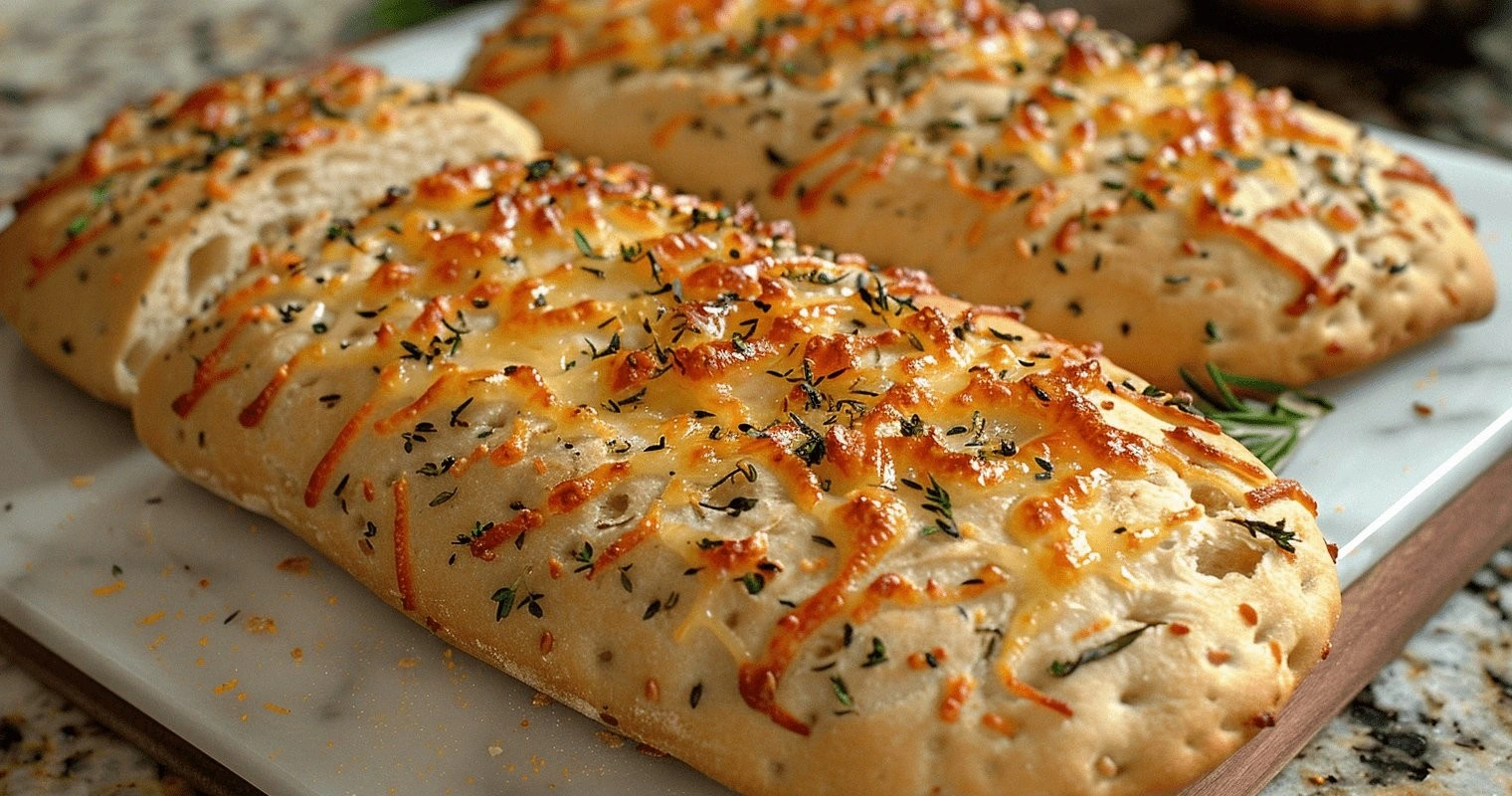
The Method — Step by Step
- Pour 1¼ cups 100°F water into a large bowl, whisk in honey until dissolved, then sprinkle yeast across the surface like you're dusting a crime scene. Let it stand five quiet minutes while you mince herbs and grate cheese. When the yeast looks creamy and smells like a brewery, you know it's ready to party. If nothing happens, your water was too hot or your yeast has joined the great bakery in the sky — start over or risk baking a brick.
- Dump in bread flour, semolina, salt, olive oil, and vinegar. Mix with a wooden spoon until a shaggy blob forms, then switch to hands and knead directly in the bowl for one minute — yes, it's messy, but we're developing gluten and coating flour with fat, which tenderizes the crumb. The dough should feel tacky like duct tape, not sticky like bubble gum. If it glues to everything, dust with a tablespoon of flour; if it's dry and rips, dip fingers in warm water and keep kneading.
- Turn dough onto a lightly floured counter and knead eight minutes. Set a timer and zen out: push, fold, quarter-turn, repeat. The dough transforms from lumpy porridge to smooth elastic satin that bounces back when poked. If you own a stand mixer, use the dough hook on medium-low for six minutes, but hand-kneading builds character and forearms worthy of kneading more bread.
- Flatten dough into a rough rectangle, scatter half the cheese and all the herbs across the surface, then roll like a jelly roll and knead thirty seconds to marble everything together. This lamination technique prevents dense cheese pockets and distributes flavor like a Vegas card dealer. The dough may tear slightly; patch and keep going — rustic is charming.
- Shape into a tight ball by cupping palms around the dough and dragging it across the counter, creating surface tension that will balloon beautifully in the oven. Place in an oiled bowl, turn to coat, cover with plastic wrap, and refrigerate at least eight hours or up to three days. The cold ferment slows yeast, letting enzymes create nutty, beer-like flavors that make amateur bakers ask, "Did you use some special Italian flour?"
- Next day, let dough sit on counter 45 minutes to shake off the chill while you preheat oven to 475°F with a cast-iron skillet or pizza stone on middle rack and a metal pan on the lowest shelf. You want everything screaming hot; a lazy preheat causes pale, soft crusts that taste like disappointment. If your oven runs cold (looking at you, vintage apartment stoves), add thirty degrees and an extra ten minutes.
- Turn dough onto parchment, gently deflate into a 10-inch oval, and dimple fingertips all over like you're giving it an acupressure session. These dimples create little cheese reservoirs and prevent giant air bubbles that puff up like whoopee cushions. Brush with olive oil, sprinkle remaining cheese, and add a dusting of flaky salt — the final snow that makes flavors pop.
- Slide parchment onto hot stone, pour one cup boiling water into the lower pan, and immediately shut the door to trap steam. Steam delays crust formation, letting the bread expand into a light, airy loaf instead of a dense Frisbee. Bake 25 minutes, then rotate pan for even browning and bake another five until the cheese blisters and the crust sings with tiny crackles when tapped.
- Cool on a rack at least 30 minutes — yes, it's torture, but cutting early steams the crumb into gummy sadness. Brush immediately with garlic butter: melt two tablespoons butter, swirl in minced garlic, pinch of salt, and chopped parsley, then paint every golden ridge. Your kitchen will smell like a garlic knot confessional.
That's it — you did it. But hold on, I've got a few more tricks that'll take this to another level...
Insider Tricks for Flawless Results
The Temperature Rule Nobody Follows
Invest in a cheap instant-read thermometer and your bread game levels up overnight. Water above 115°F murders yeast; below 70°F sends it into hibernation. Dough is ready for the fridge when it hits 72°F, and it's fully proofed on the counter when internal temp reaches 78°F. Yes, bread has an internal temp — think of it as the difference between a fluffy cloud and a rubber tire.
Why Your Nose Knows Best
Trust the aroma checkpoints: after five minutes of baking you should smell toasted cheese, at fifteen minutes herbs turn floral, and at twenty-five minutes the crust develops nutty, caramel notes. If your smoke alarm sings, the crust is incinerating — drop oven temp by 25°F and crack the door for thirty seconds. Your nose is smarter than any timer app.
The 5-Minute Rest That Changes Everything
After the garlic-butter brush, tent loaf loosely with foil and walk away for five final minutes. Butter soaks in, crust sets, and cheese firms just enough to slice without oozing off. Skip this and your first cut turns into a cheese landslide that burns fingers and breaks hearts. Use the pause to pour wine or set the table — multitasking tastes delicious.
Salvage the Sad Loaf
Over-baked? Cube the dry bread, toss with olive oil, garlic powder, and more herbs, then toast at 350°F for 15 minutes. You just invented world-class croutons that make salads feel indulgent. Under-baked center? Cube, layer with tomato sauce and mozzarella, bake into a cheesy bread-pudding that Italians call "la scarpetta" — the little shoe that scoops up sauce.
Cheese Distribution Jedi Move
Rather than folding all cheese into dough, reserve half for the topping and press it into the surface after dimpling. Surface cheese caramelizes into lacy frico edges, while interior cheese melts into molten pockets. This contrast is what separates legendary loaves from merely good ones. My tasters always fight over the corner pieces — plan accordingly.
Creative Twists and Variations
This recipe is a playground. Here are some of my favorite ways to switch things up:
Sunset Tomato & Basil
Swap thyme for fresh basil, fold in sun-dried tomato strips with the cheese, and finish with a balsamic glaze drizzle. The sweet-tart tomatoes play off salty Parm like culinary beach volleyball. Perfect for summer bruschetta nights when you want to feel fancy without wearing real pants.
Fiery Calabrian
Mince Calabrian chilies into the garlic butter and add a handful of diced pepperoni under the cheese blanket. The chilies' fruity heat and the pepperoni's smoky oils turn this into pizza's rowdy cousin. Serve with cold beer and prepare for high-fives.
Truffle & Fontina
Replace mozzarella with nutty fontina and add a whisper of white truffle oil to the dough. It's heady, luxe, and tastes like you paid thirty dollars for an appetizer in a downtown bistro. Great for date night when you want to look effortlessly gourmet.
Everything-Bagel Remix
Brush with egg wash instead of olive oil and coat top with everything-bagel seasoning plus extra sesame seeds. The garlicky crust tastes like your favorite deli breakfast exploded into artisan bread form. Toasted with cream cheese? Mind blown.
Sweet & Salty Dessert Hack
Omit herbs, use Gruyère, and finish with a light brush of honey-butter after baking. The sweet-savory combo pairs beautifully with fig jam or a glass of chilled Riesling. Your guests will argue whether it's dinner or dessert — make extra because they'll want seconds of both.
Whole-Wheat Hug
Replace half the bread flour with whole-wheat flour and add two extra tablespoons water. The nutty wheat deepens the flavor and makes you feel virtuous enough to justify an extra slice slathered in butter. It's comfort food that pretends to be health food — we'll take it.
Storing and Bringing It Back to Life
Fridge Storage
Wrap completely cooled loaf in foil, then slip into a zip bag with the air squeezed out. It keeps four days at room temp or seven in the fridge, though crust softens slightly. To restore crunch, unwrap and heat at 375°F for five minutes — the foil-and-bag combo prevents staling while maintaining just enough moisture.
Freezer Friendly
Slice first, layer parchment between slices, then freeze flat on a tray before transferring to a freezer bag. Individual slices thaw in a toaster in under two minutes, making midnight cravings dangerously easy. Whole loaves freeze beautifully for two months; thaw overnight in the bag, then refresh at 350°F for ten minutes.
Best Reheating Method
Sprinkle a few drops of water on the cut surface, wrap in foil, and warm at 350°F for eight minutes. The steam revives the interior while the foil protects the crust from over-browning. For extra oomph, open the foil for the final two minutes to recrisp edges. Slice, slather with butter, and pretend it's day one all over again.